


If you’re planning a visit to Kyoto, Japan, exploring the city’s famous Buddhist temples is likely high on your priority list. Many of the most iconic temples in Kyoto are found in the Higashiyama ward, making it a must-visit area for travelers. If we haven’t met, I’m Gina, and I visited Kyoto for the first time with my friend Rachel. This post will take you through our experience visiting some of Kyoto’s best temples, including how we would recommend planning your temple visit. I’ve also included a map of the Kyoto temples that I talk about in this post.

This trip was my and Rachel’s first visit to Japan, and Kyoto was our first stop. We couldn’t wait to see the temples, learn about Buddhism, and gain a deeper appreciation for Japan’s rich history and traditions. Throughout our visit, we learned about the differences between a temple and a shrine, as well as how to pray at a shrine, which I’ll explain further down. The entire experience was so enlightening, and we left with such a deep respect for the spiritual practices that shape Japanese culture. If you have any questions as you’re reading, feel free to use the Contact Me form at the bottom or message me on Instagram. Now, let’s explore the Kyoto temples!
- Related Post: Things To Do in Tokyo, Japan As A Solo Traveler
How I Would Recommend Seeing the Kyoto Temples
Before coming to Kyoto, I read on multiple sites that “temple fatigue is real” – and they weren’t kidding! When I planned our Kyoto itinerary, I devoted an entire day to powering through the 6 different temples on this list. In hindsight, Rachel and I both agreed that if we had to do it again, we would have split them up into 2 different days. This way, we would have been able to take our time going through the temples instead of rushing a bit due to our exhaustion.
During our temple day, we started out at Chion-in Temple, which took us about an hour and a half to explore. By the time we got to our 3rd temple, we were feeling pretty tired. Spreading your temple visits out over 2-3 days will allow you to really be able to take your time and appreciate the little details that make these sacred areas special. The chart below shows roughly how much time you should anticipate spending at each temple:
How Much Time Does It Take to See Temples in Kyoto?
On average, it takes about 30 minutes to an hour to see most of the temples, depending on how involved you want your visit to be, Some were notably more involved, so we spent a little longer here (about 1.5 hours). Below is a breakdown of how much time you can anticipate spending at the different temples in this post.
1 – 1.5 hours
- Pro Tip: Most of these temples are within reasonable walking distance of each other (about 10-15 minutes). The hardest one to get to is Kiyomizu-dera due to it being on top of a mountain. Bring comfortable walking shoes – it’s worth a visit!
Options for Planning Your Temple Visits
Temple Visit Option 1
- Day 1: Kenninji, Hokan-ji, Ryozen Kannon, Kodai-ji (all ~30 minute visits)
- Day 2: Chion-in, Kiyomizu-dera (both 1 – 1.5 hour visits)
Temple Visit Option 2
- Day 1: Chion-in, Kodai-ji, Ryozen Cannon (1 longer visit + 2 shorter visits)
- Day 2: Kiyomizu-dera, Hokan-ji, Kenninji (1 longer visit + 2 shorter visits)
Map of Higashiyama Temples in Kyoto
1. Kodai-ji Temple

Kodai-ji Temple was one of my favorite Kyoto temples largely because of its peaceful atmosphere and beautifully landscaped grounds. It was built in 1606 to honor legendary Japanese ruler Toyotomi Hideyoshi by his wife, Nene. We enjoyed taking some time to wander through the grounds and admire the tranquil pond, manicured pine trees, and the Zen rock garden. But my favorite part about this temple was the mini bamboo forest that you can walk through. In fact, Rachel and I opted out of taking a day trip to Arashiyama Bamboo Forest because we discovered that this would be a good (and much less crowded!) compromise.

2. Ryozen Kannon Temple

The first thing you’ll notice about the Ryozen Kannon Temple is the massive 80-foot-tall statue of Kannon, the Buddhist Goddess of Mercy. You can also go inside the statue and see an enshrined image of Kannon with 11 heads, as well as admire the Buddha’s footprints on a massive concrete slab outside to the left of the statue. Ryozen Kannon was established in 1955 as a memorial to those who lost their lives during the Pacific War and serves as a place of peace, remembrance, and reflection. Although Rachel and I preferred the more ancient-looking temples, it was cool to see how this temple looks much more modern than the others.

3. Hokan-ji Temple

Hokan-Ji Temple, also called Yasaka Pagoda, is a massive 5-story temple located in the middle of a local Kyoto neighborhood. Ironically, it’s only open on weekends and holidays, so Rachel and I didn’t get to go inside and marvel at the interior (we visited on a Tuesday). This temple ended up being our quickest stop because there weren’t grounds or gardens to explore like at the other temples.
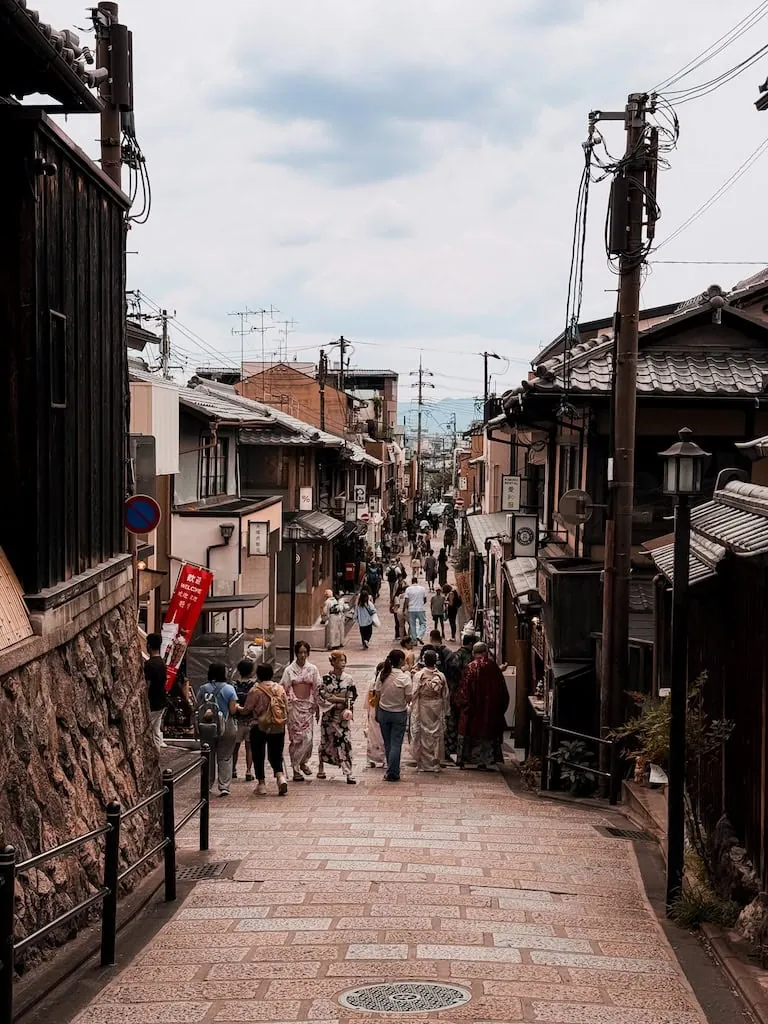
- Pro Tip: We spotted a kimono rental shop just down the street from Hokan-Ji Temple, and noticed a lot of people were dressed up in the traditional Japanese attire to explore the temples. We both agreed this would have been fun to do, especially in spring or fall when the temperatures were cooler.
4. Kenninji Temple


Kenninji Temple is the oldest zen temple in Kyoto. There are several large halls and a few smaller buildings on the temple grounds. The big attraction here is the massive dragon painting on the ceiling of Dharma Hall, which you’re allowed to lay on the floor and photograph. Kenninji Temple was our last stop during our temple day, so Rachel and I laid on the floor and relaxed for longer than we originally planned! A lot of temples had strict “No Photography” signs in the Main Hall of their temples, but this one didn’t, so we were able to capture this photo of one of the interior displays:

5. Chion-in Temple
Chion-in Temple was the first temple Rachel and I explored on our temple day, mostly because it opened earlier than the others (9:00am vs. 10:00am). Like I mentioned at the beginning, this temple was much more involved than some of the others, so we spent about an hour and a half here. In hindsight, one of the things that immediately stood out to us about Chion-in Temple was its sheer size. The massive sanmon gate at the beginning is one of the most impressive structures in Kyoto, and it sets the tone for the sprawling complex beyond.

Chion-in Temple has 2 different gardens (Yuzen-en and Hojo), a few cemeteries, and lots of stairs – so definitely wear comfortable shoes. Of note, the gardens cost 300 yen each to enter (or 500 yen for both), but we thought they were worth it. We thought the cemetery at Hojo Gardens was especially interesting. Many of the headstones are flanked with wooden sticks called sotobas (or itatobas) that are inscribed with the deceased person’s Buddhist name, date of passing, and prayers, along with Sanskrit symbols.


6. Kiyomizu-dera Temple
IMO, Kiyomizu-dera Temple was the most difficult temple to get to, but that’s only because you have to walk up a steep hill to get there. Or, you can do what I did and take a cab or Uber! No one will judge you, especially not me 😉. Once you get up here, you’ll see multiple buildings, including temples, shrines, and a 3-story pagoda. It’s no surprise that this temple, founded in 778, is a UNESCO World Heritage Site. Kiyomizu-dera ended up being one of my favorite temples, along with Chion-in.
- Pro Tip: There are tons of food places, shops, and vending machines on the way up the hill. If you’re feeling dehydrated before or after your visit, Japan has got you covered.

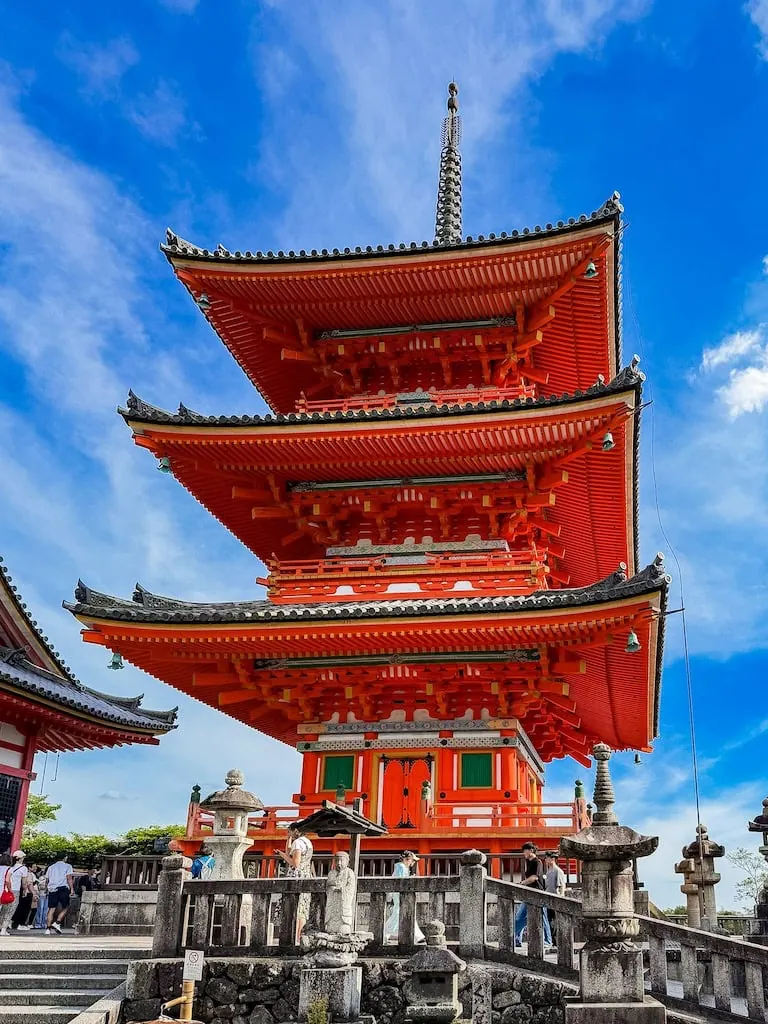
Because it’s on top of a mountain, Kiyomizu-dera has some stunning views of Kyoto. It’s especially picturesque to come up here at sunset. While the viewpoint is certainly a major highlight, the temple grounds themselves are equally impressive. After you enter, there are peaceful pathways and several smaller shrines and buildings to explore.

What’s the Difference Between a Temple and a Shrine?
Throughout our stay in Japan, Rachel and I encountered almost as many shrines as we did temples. One of the main differences between a shrine and a temple is the religion they’re associated with. Shrines are associated with Shintoism (or simply Shinto), while temples are associated with Buddhism.
You can often distinguish a temple from a shrine by its entrance. Temples usually have a large wooden gate leading into the grounds, like the Sanmon Gate at Chion-in Temple that I posted earlier. In contrast, shrines are typically marked by a red torii gate, although sometimes you’ll encounter natural or wooden gates.
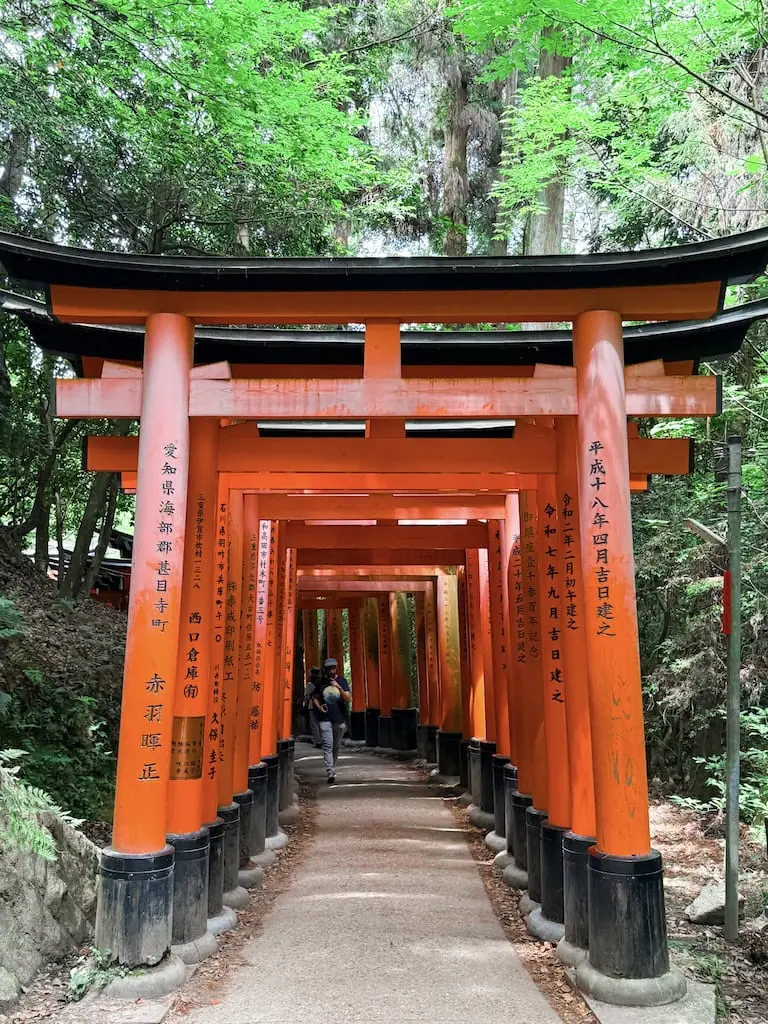
Rachel and I stumbled upon the Yasaka Shrine on our way to the Chion-in Temple, and we loved walking around and looking at the temple grounds, lanterns, and vibrant colors. Of note, the entrance to this shrine looks similar to what you would expect the entrance to a Buddhist temple to look like, except it’s bright red instead of a wooden color. We learned this was due to the blending of the Shinto and Buddhism religions in Japan.


How to Pray at a Shrine vs. A Temple in Japan
Rachel and I quickly noticed people stopping to pray at shrines and temples, and we were fascinated by how different the rituals were from those in Western cultures. We found ourselves quietly observing visitors to better understand the customs. After a few guided tours and some helpful explanations from our tour guides, we finally learned the proper etiquette. I’ve outlined the steps for praying at both shrines and temples below. No matter which you visit, be sure to bow before passing through a torii or Sanmon gate.
Praying at a Shrine
- Cleanse both your hands and your mouth with water from the water basin
- Throw a coin in the offering box (5 cent pieces – or multiples of 5 – are good luck!)
- Ring the bell
- Bow twice, clap twice, pray silently, clap once
Praying at a Temple
- Optional: If you choose to partake in incense burning, you may purchase incense sticks from the temple grounds. You may then waft the smoke from the incense over parts of your body that may be feeling unwell or that need special attention. Place incense in the large ash burner when finished.
- Throw a coin in the offering box
- Place your palms together, bow, and pray silently (there is no clapping at temples)
Other Tips for Visiting the Kyoto Temples
What Should You Wear When Visiting the Temples?
Before visiting the temples, we read mixed things about having to cover your shoulders and/or knees. We covered ours just to be safe, but we saw multiple people walking around without theirs covered. Another fun option would be to rent a kimono, like I mentioned earlier! We saw so many people doing this and agreed it would have been so much fun – although depending on the time of year you go, it could also be really hot! There are tons of kimono rental shops around for men and women, and many places also do your hair. Of course, you’ll have to remove your shoes when going inside ALL the temples, no matter what you wear!
What’s the Best Area to Stay in Kyoto to See the Temples?
During our Kyoto trip, Rachel and I stayed in a hotel that was near both the Gion and Higashiyama wards (note – Gion is the main geisha district of Kyoto!). We absolutely loved our room and the location, and it put us within walking distance to the temples. For first-time visitors, Gion or Higashiyama are two of the best areas to stay in Kyoto. I’ve linked the hotel that we stayed in below:
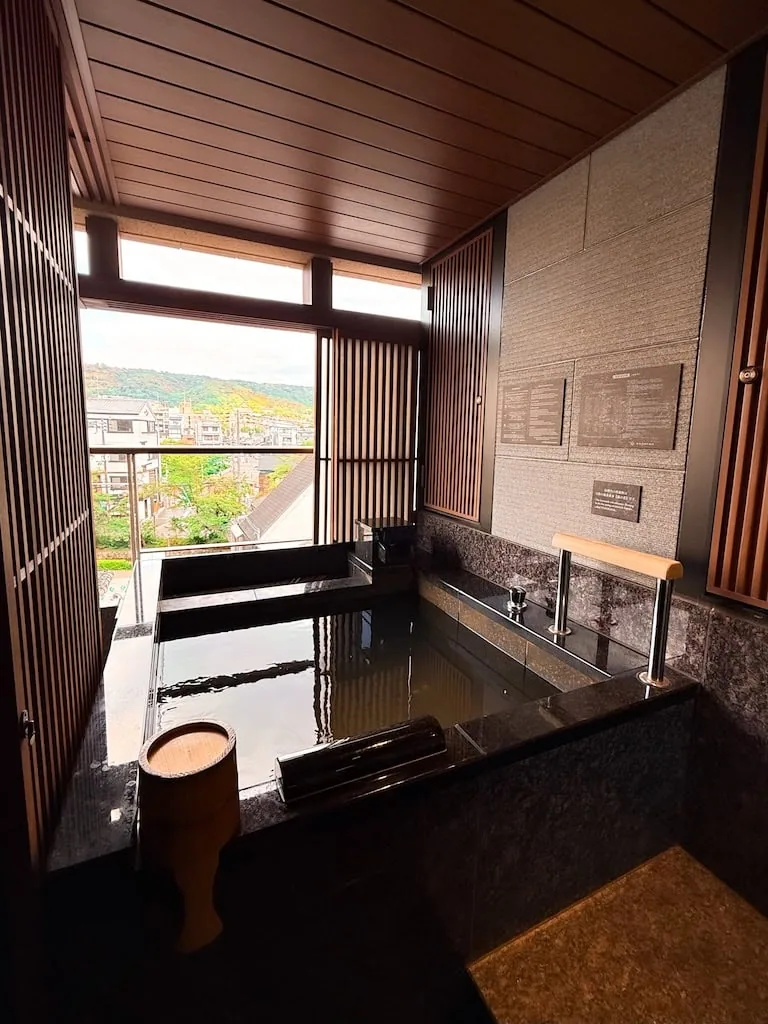
Kyoto Hotel recommendation
Sora Niwa Terrace Kyoto Bettei
Rachel and I stayed in this hotel and absolutely loved it. We would highly recommend treating yourself to a room with a private onsen (see photo) – it was our favorite part of the hotel!